Parking Jam: Car Parking Games
- 4.4
- Rating
- 10.00M
- Installs
- Free
- Price
 Analysis by App-foxy
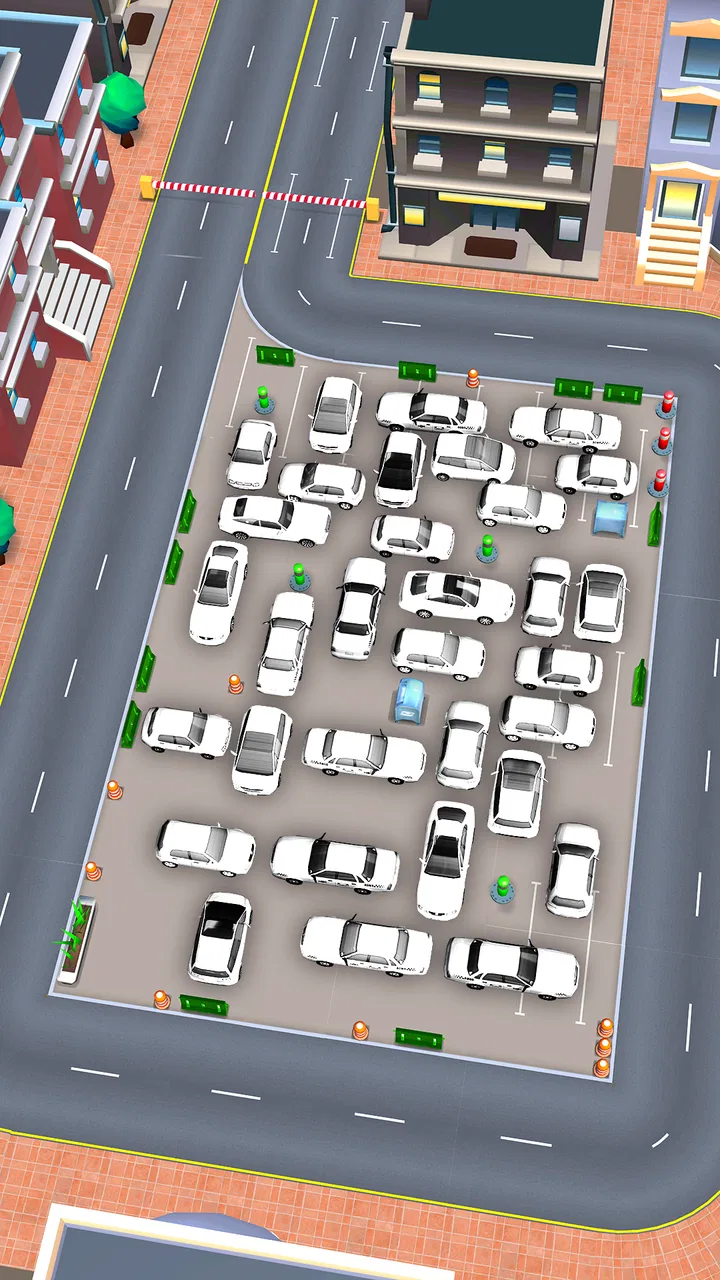
I approached Parking Jam: Car Parking Games as a quick strategy game rather than a traditional driving simulator, and that distinction matters from the first puzzle. The goal is not to steer through a realistic city or compete for lap times. Instead, I look at a crowded parking area, work out which vehicle can leave first, and gradually clear the blockage without making a move that creates a worse problem. It is simple to understand, but the better levels ask for more patience than the bright, casual presentation initially suggests.
Developed by TapNation, this free game sits in the strategy category and is aimed at players who enjoy short logic challenges. The store summary describes the central task as solving a car parking jam, and that is exactly how I experienced it: each board is a small traffic puzzle where order, space and timing matter more than reflexes. It has a Mature 17+ content rating, so it is worth checking that classification before handing the device to a younger player.
How I play each parking puzzle
My usual workflow starts with a pause. I do not immediately drag the most obvious car toward the exit. I scan the whole layout, identify the vehicles that are directly blocking others, and check whether a seemingly helpful move will close the only useful route. That first few seconds often makes the difference between a clean solution and a board that needs to be restarted.
You May Also Like

 Blood Strike: 2.5 Anniversary
Blood Strike’s Loadouts Turn Every Drop Into a Tactical Gamble
A close look at Blood Strike’s custom loadouts: how fast access to signature weapons reshapes its battle royale rhythm, rewards preparation, and narrows the gap between fights.

 Pandora - Music & Podcasts
Pandora’s Music Is Easy to Start, but Harder to Recover
Pandora’s strength is its low-effort path from a seed to a station. Its weak spot is how much confidence it asks you to place in connection, setup, and quiet recovery.

 8 Ball Pool
 Is Built on Rivalries, Rematches, and Routine
A close look at the rivalries, rematches, shared routines, and unanswered safety questions that turn a quick pool match into a persistent mobile community.

 Samsung Music
’s Quiet Strength Is Playing What You Already Own
Its reach comes less from spectacle than from dependable access to a personal library. That simplicity is both the app’s strongest retention engine and its ceiling.

 AccuWeather: Weather Radar
AccuWeather Review: A Quick, Clear Forecast for Everyday Decisions
For everyday plans, the best forecast is the one you can understand quickly. AccuWeather makes rain timing, radar, and local conditions easy to act on, with a few trade-offs.

 Hill Climb Racing
Why Hill Climb Racing Still Turns Crashes Into One More Run
A tiny car, a bumpy hill and one more upgrade: Hill Climb Racing keeps resurfacing because its simple chaos makes every near-miss feel personal.
More From Our News Desk



The controls are built around the idea of moving cars out of the jam, so the game feels approachable even when the arrangement becomes complicated. I found it more useful to think in terms of dependencies than individual vehicles. If one car is trapped behind another, the front car becomes the priority. If an open lane can serve as temporary space, I treat it as a resource rather than rushing to use it.
This makes the game a good fit for small breaks. I can play a puzzle while waiting for a coffee, during a short commute, or when I want something more active than scrolling but less demanding than a full strategy session. The individual challenge structure makes it easy to stop after a successful solution, although the “one more puzzle” feeling can make a short break longer than planned.
A realistic example is a late afternoon when I have only a few minutes before leaving home. I can open the game, solve a compact parking arrangement, and put it away without needing to remember a story, manage a long-term team or reach a checkpoint. That convenience is one of its strongest qualities. It respects short sessions better than many strategy games that require preparation before the interesting part begins.
The important habit is to separate observation from action. I first locate the exit direction, then identify cars with a clear path, and only afterward decide which blocked vehicle should move. This sounds obvious, but the colorful layout encourages quick swipes. Experienced play is calmer: I make fewer exploratory movements and try to preserve flexibility for the final part of the board.
Why the basic loop works
The appeal comes from turning a familiar everyday scene into a logic problem. Most people understand the frustration of a crowded car park, but here the frustration is controlled and reversible. There is no need to learn a complicated ruleset before the puzzle becomes interesting. The challenge grows from the arrangement itself.
I also like that the game does not require me to be good at virtual driving. Someone who dislikes racing games can still enjoy it because the central skill is planning. The best moments are not fast ones; they are the moments when I notice that a car I had ignored is actually the key to opening the entire board.
That said, the same focused loop can feel narrow. Players who want exploration, character development, competitive matches or a strong narrative will probably find the experience too repetitive. This is a puzzle game about clearing parking congestion, not a broad vehicle game with several connected activities.
Settings and practical checks before a long session
Before settling into a longer run, I check the available in-game options rather than assuming the default setup is ideal. In a game based on precise visual choices, comfortable sound levels and a screen that is easy to read can matter more than they would in a purely text-based puzzle. I prefer a setup that lets me concentrate on vehicle positions instead of distractions.
I also pay attention to the device itself. The minimum operating system listed for the game is Android 7.0, while the current version is 6.15.0. That makes checking compatibility sensible if the phone is older or has not been updated for some time. On a supported device, I would still close unnecessary apps before a long session, especially if the phone tends to slow down when several things are running.
The game is free to install, but it includes purchases ranging from $0.49 to $89.99 per item. I would treat that as a reason to review purchase controls before letting a child use the device or before starting a relaxed session where impulse spending is easy. The free entry point is convenient, but “free” does not mean every possible convenience or option is outside the purchase system.
This is also where the Mature 17+ label deserves attention. The label is part of the product information I would consider before recommending it to a family member. A parent should make the decision based on the device’s age controls and the player’s age, rather than assuming that a car puzzle automatically belongs in a child-friendly category.
One useful preparation is to decide how I want to handle difficult boards. I can either spend time planning every move, or accept that a restart may be quicker when an early choice leaves the layout awkward. Neither approach is universally better. Careful planning is satisfying when the board is close to solved, while a restart is practical when I have already lost the useful open space.
Small habits that make the puzzles easier
The first habit I recommend is tracing routes mentally before moving anything. I look for the vehicles that have an unobstructed path and consider whether removing them creates room for a larger vehicle. A car that can leave immediately is not always the best first move if it occupies a lane needed by several others.
The second is to avoid spending the last open area too early. In crowded arrangements, empty space functions like a temporary parking bay. Once I fill it with a vehicle that could have stayed where it was, the rest of the puzzle can become much harder. I try to keep at least one flexible route available until the structure of the board is clearer.
The third is to work backward from the end. If I imagine the final few cars leaving, I can often see which vehicle must remain movable until late in the solution. This is more reliable than simply choosing the car that looks closest to the exit. The apparently easy move can be a trap when it blocks the final route.
I also use deliberate pauses after every major opening. Once a group of cars has moved, the board may reveal a different priority. Continuing with the original plan without reassessing is a common source of unnecessary mistakes. The puzzle changes as space opens, so my plan should change with it.
For a quick session, I use a simpler rule: solve the obvious obstruction, reassess, and stop if the next move is unclear. That prevents random swiping from turning a manageable board into a confusing one. For a longer session, I experiment more, but I still try to understand why a move failed rather than repeating it without a plan.
Where experienced play becomes faster
Speed in this game does not come from moving more quickly. It comes from reducing wasted decisions. I group cars by their role in the blockage: direct blockers, vehicles that can create space, and cars that should probably remain untouched until late. This mental grouping helps me avoid treating every vehicle as equally important.
Another efficient pattern is to identify reversible moves. If moving a car opens a route without consuming a valuable position, it is a relatively safe experiment. If the move places a vehicle across the only useful lane, I delay it until I know what follows. This gives me a practical way to judge risk without needing a formal scoring system.
I find it helpful to zoom my attention out rather than focusing on the nearest car. The nearest car is often visually dominant, but the real key may be at the opposite side of the parking area. Looking at the complete arrangement reduces tunnel vision and makes the puzzle feel less like a sequence of reactions.
When I get stuck, I do not immediately blame the final move. I review the first moment when the board lost flexibility. Usually the problem began earlier, when I used a clear lane for a car that did not need it or removed a vehicle that was quietly supporting another route. This review turns failed attempts into useful information.
These habits are especially valuable for players who want a calm logic game rather than a reflex test. The game rewards attention, but it does not require frantic tapping. I can improve by seeing relationships between vehicles, not by developing faster fingers.
Limits, friction and when another game may suit you better
The main limitation is repetition. The central parking-jam idea is clear and accessible, but players who need constant novelty may tire of arranging vehicles in similar ways. Even when the layouts change, the basic action remains familiar. I would not choose this as my only game if I wanted a wide variety of mechanics.
The free-to-play structure is another consideration. The game costs nothing to start, which lowers the barrier to trying it, but the presence of in-app purchases means I would pay attention to spending settings. A player who dislikes any purchase prompts or prefers a single upfront price may feel more comfortable with a premium puzzle alternative.
It is also not the best choice for someone looking for a realistic parking simulator. There is no reason to approach it expecting authentic steering practice, traffic rules or a detailed driving environment. Its cars are pieces in a spatial puzzle. If the goal is to learn parking technique, a simulation-focused title would be a better match.
Compared with classic sliding-block puzzles, this game is more immediately familiar because the vehicles and parking situation are easy to understand. Compared with a racing game, it is slower and more thoughtful, with no need to master acceleration or cornering. Compared with a large strategy game, it offers far less long-term management but is much easier to pick up for a few minutes.
That middle position is both its strength and its weakness. It is more engaging than a completely passive time-killer, yet lighter than a deep strategy experience. I recommend it to people who want compact spatial challenges. I would steer serious puzzle fans toward a more complex alternative if they need extensive rule systems, multiple mechanics or a long campaign.
Who will enjoy it most
I think the best audience is anyone who likes organizing problems into steps. It works for casual players who want an easy starting point, but it also gives experienced puzzle players room to develop better habits. The controls are approachable, while the order of moves can still demand careful thought.
It is particularly suitable for short, interruption-friendly sessions. I do not need to remember a complicated plot or maintain a large strategy between visits. That makes it useful on a phone for waiting rooms, breaks and travel, provided the player is comfortable with the game’s age classification and purchase model.
I would skip it if I become bored by repeating one core activity, if I want multiplayer competition, or if I am specifically searching for driving realism. I would also avoid recommending it casually to a young child because the Mature 17+ rating should be taken seriously, regardless of how simple the puzzle concept appears.
My verdict after settling into the routine
Parking Jam: Car Parking Games succeeds because it turns a small, recognizable problem into a clean strategy loop. I enjoy the moment when a crowded layout stops looking chaotic and starts revealing an order. The strongest way to play is not to rush: scan the board, protect open space, move the true blockers first and reassess after each major change.
TapNation’s game is easy to begin, free to try and well suited to short sessions. Its average rating is 4.4 from around 69 thousand ratings, and it has passed over 10 million installs, which fits the broad appeal I felt while playing: the concept is immediately understandable even when the decisions become more demanding.
My final recommendation is conditional but positive. If you want a compact car-themed logic game, this is an enjoyable choice, especially when you appreciate puzzles that reward planning instead of speed. If you need deep strategy, realistic driving or a purchase-free experience, I would look elsewhere. For everyone in between, the game offers a satisfying routine: observe the jam, preserve your options, and clear the lot one well-chosen move at a time.
FAQs for Parking Jam: Car Parking Games
01What is Parking Jam: Car Parking Games?
Parking Jam: Car Parking Games is a puzzle and driving game focused on freeing vehicles from crowded parking areas. Each level requires you to move cars in the correct order so they can leave without crashing into other vehicles or obstacles. As the stages progress, layouts become more complicated, testing your planning, timing, and problem-solving skills rather than traditional high-speed driving ability.
02How do you play Parking Jam: Car Parking Games?
The main gameplay is based on selecting parked cars and guiding them out of the lot when the path is clear. You need to observe the position and direction of every vehicle before making a move, because an incorrect action can block the remaining cars. Later levels may introduce tighter spaces, additional obstacles, and more demanding arrangements, making careful planning essential for completing each puzzle.
03Is Parking Jam: Car Parking Games suitable for children?
The game is generally easy to understand because it uses simple controls and a straightforward objective, making it accessible to many younger players. However, parents should still check the current age rating, advertising content, in-app purchase options, and privacy information on the relevant app store. Difficulty can also increase over time, so younger children may occasionally need help with harder puzzles.
04Does Parking Jam: Car Parking Games require an internet connection?
Many parking puzzle games can be played offline after installation, which is useful when traveling or when mobile data is unavailable. Nevertheless, certain features may depend on an internet connection, including advertisements, optional rewards, analytics, updates, or purchases. Because requirements can change between versions and platforms, it is best to test the game in airplane mode and review the store listing before downloading.
05Is Parking Jam: Car Parking Games free to download and play?
The game is typically available as a free download, allowing players to access its main puzzles without paying upfront. Free versions commonly include advertisements and may offer optional in-app purchases for removing ads, gaining hints, or obtaining other bonuses. Before installing, review the app store listing for the latest pricing details and consider disabling purchase permissions if children will be playing.
Pros
- Simple controls make it easy for new players to start quickly.
- Short levels are ideal for quick gaming sessions.
- Increasing difficulty keeps the puzzle challenge engaging.
- Colorful visuals make cars and parking areas easy to recognize.
- Offline play is convenient when you have no internet connection.
Cons
- Frequent ads may interrupt gameplay between levels.
- Later puzzles can feel repetitive after extended play.
- Some levels may rely more on trial and error than strategy.
- Extra moves or rewards may encourage optional in-app purchases.
- The game can become frustrating when one mistake blocks the exit.

Parking Jam: Car Parking Games
Gallery